Protein banks
Lucerne, Desmodium and sweet potato vines — nitrogen-fixing and high in crude protein — critical for liveweight gain in the feedlot and improved milk yield in breeding stock.

ETB operates a diversified, multi-species fodder bank in Kajiado — deliberately classified by nutritional function to produce a balanced ration and buffer against the failure of any single crop under climate stress.
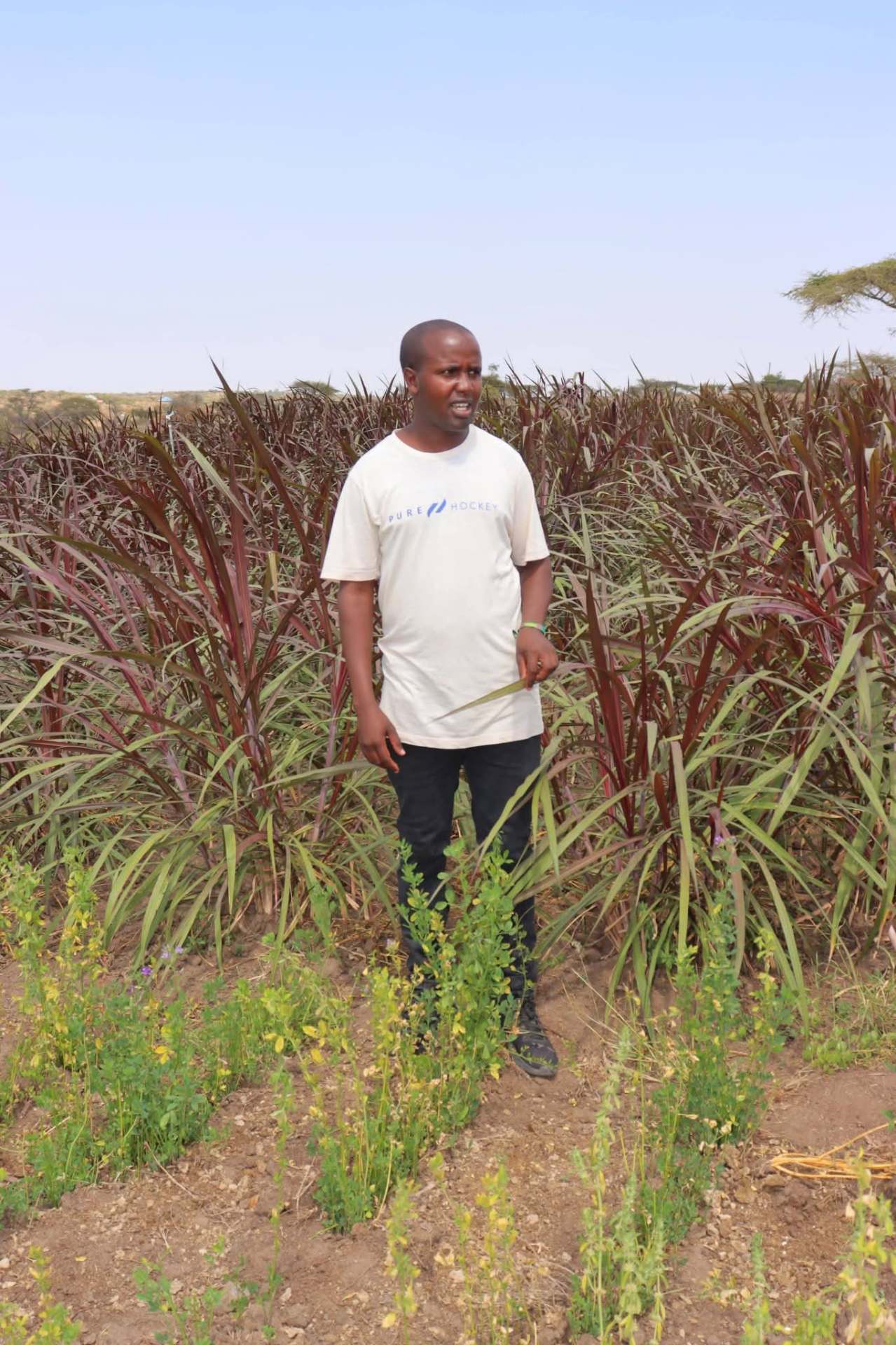
Species are chosen to span protein, energy, fibre and browse — reflecting the multi-species agronomic resilience required of livestock feed systems in Kenya's arid and semi-arid lands.
Lucerne, Desmodium and sweet potato vines — nitrogen-fixing and high in crude protein — critical for liveweight gain in the feedlot and improved milk yield in breeding stock.
Maize and Sudan grass provide the carbohydrate density needed to accelerate fattening cycles and sustain body condition through the dry season.
Napier grass varieties (Red Australian Napier, Super Napier), Rhodes grass and Juncao grass form the fibrous base of the ration and deliver drought-tolerant biomass for large-scale storage.
Fodder trees integrated into the farm's land-use system supply supplementary protein and fibre while reinforcing soil and water conservation.
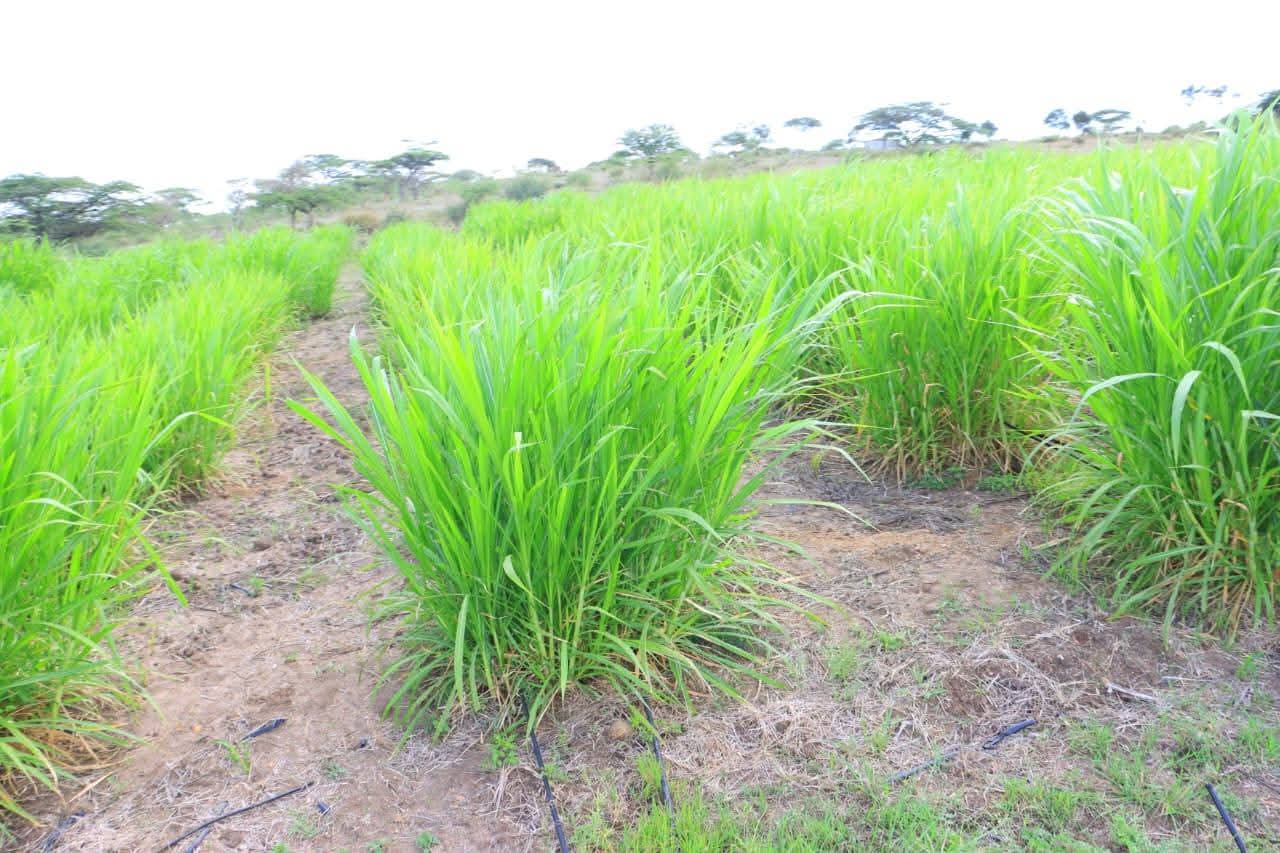
A key innovation at Osiligi — valued for its exceptional yield, protein content and role in supporting both fattening and community fodder farming. Juncao supports significant improvements in milk yields and rapid beef cattle fattening cycles, and is also sold to community members practising fodder farming, extending its benefit beyond ETB's operations.
Seven fodder banks — combined storage exceeding one million kilograms — give ETB the capacity to buffer over 2,000 cattle through extended dry seasons. This converts feed planning from reactive drought response to proactive climate resilience, shielding pastoralist herds from the recurrent shocks driving livestock losses across the region.
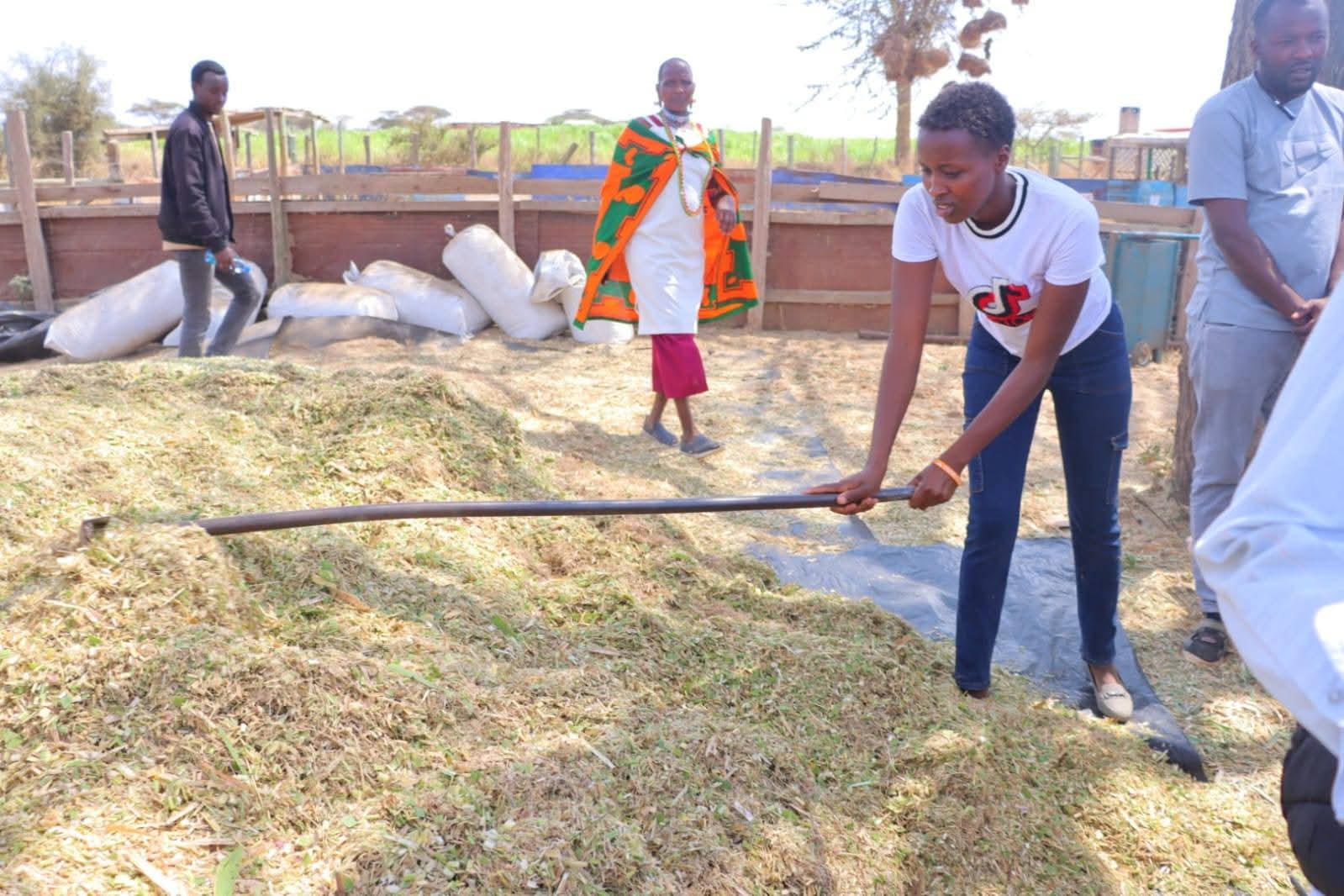
ETB also trains communities directly in hay baling and silage fermentation, shifting pastoralist practice from reactive to proactive feed management.
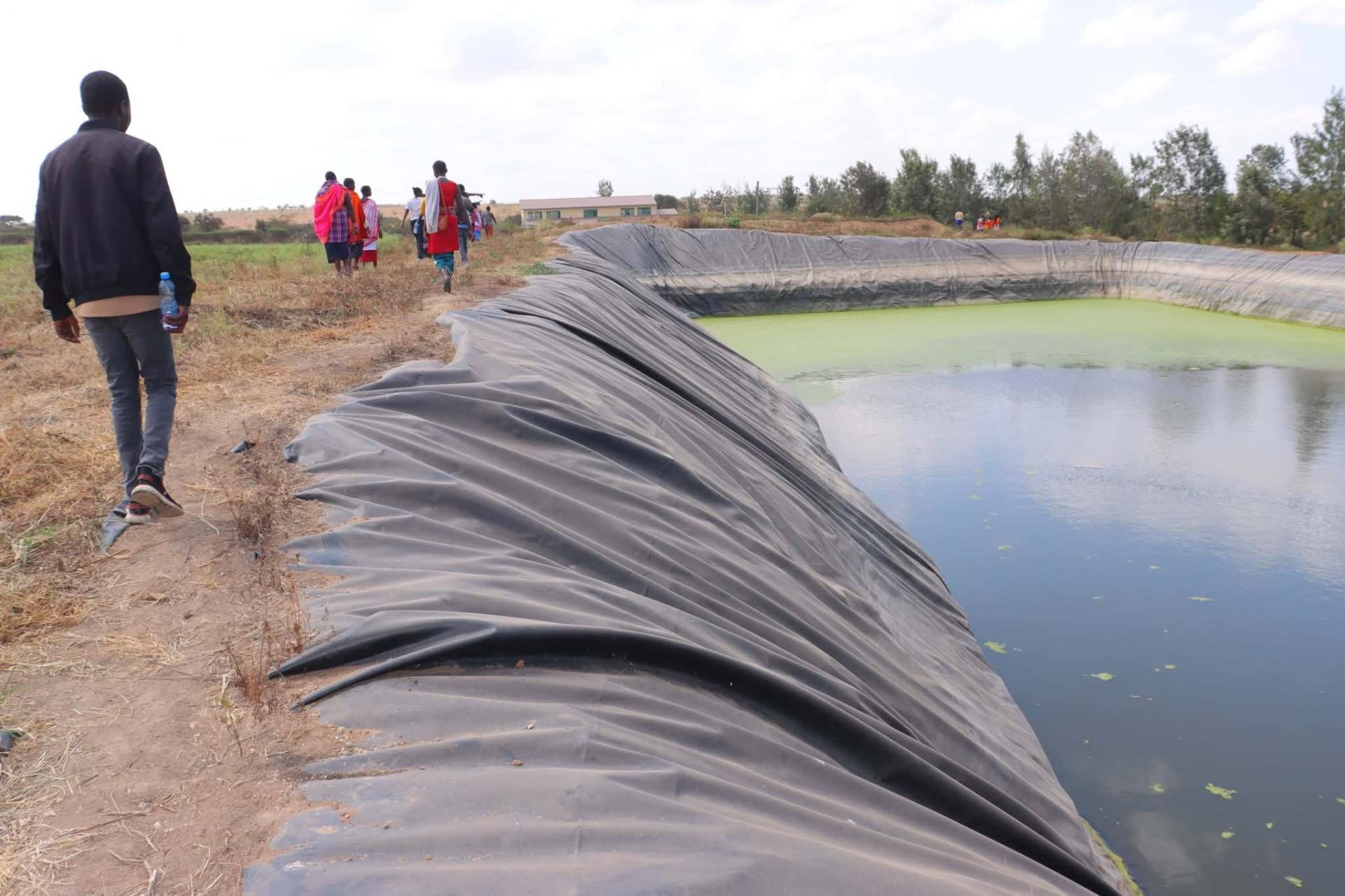
Five operational dams secure year-round irrigation for fodder crops under increasing climate variability, underpinning the farm's ability to sustain fodder production through dry seasons and enabling training in rainwater harvesting and water-efficient irrigation.
We partner with counties, cooperatives and NGOs to replicate the Osiligi fodder model across Kenya's 15 pastoralist counties.
Osiligi Farm, Oloosuyian Road, Kajiado · +254 733 979 794 · kenyatopbreeders@gmail.com